Why Some Businesses Keep Advertising but Never Build a Strong Online Presence
Many businesses invest regularly in digital advertising to attract customers, promote their services, and increase sales. They run Google Ads, launch social media campaigns, and spend money reaching potential customers. Yet, despite continuous advertising, their online presence remains weak.
Their social media pages lack consistency, their websites receive little organic traffic, and customers rarely recognise their brand beyond individual advertisements.
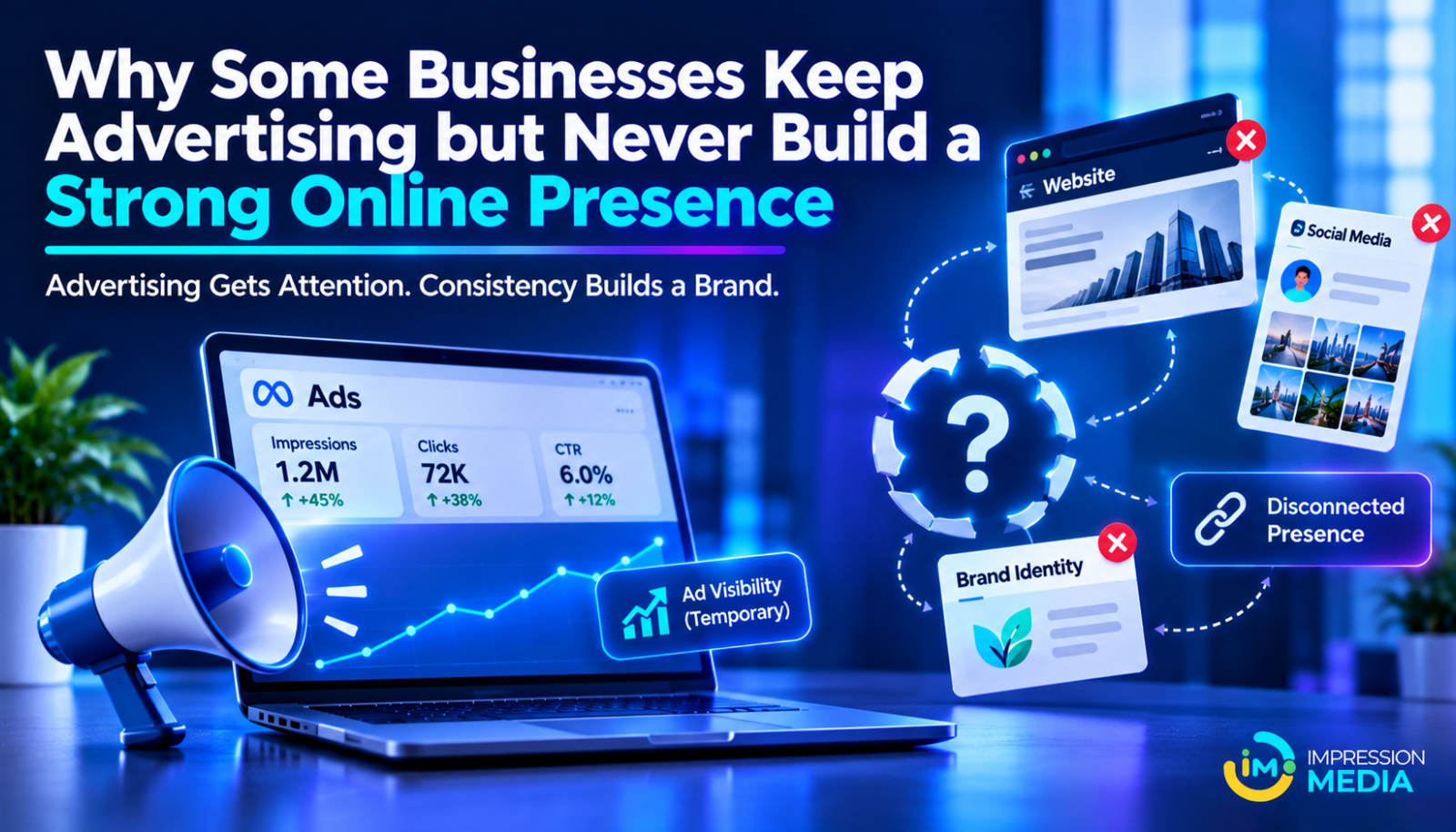
This happens because advertising and building an online presence are two different things. Advertising can bring immediate visibility, but a strong digital presence requires consistent effort across multiple channels.
Businesses that focus only on paid promotions may continue spending money to attract attention without building long-term recognition, trust, or organic visibility.
Understanding the difference is essential for businesses that want sustainable growth rather than temporary traffic.
1. Advertising Becomes Their Only Marketing Strategy
One of the biggest reasons businesses struggle to establish an online presence is their dependence on paid advertising.
When a company wants more enquiries, it launches an advertising campaign. When traffic decreases, it increases the budget. When leads slow down, it creates another promotion.
This approach may generate short-term results, but it does not necessarily strengthen the brand.
Why Depending Only on Paid Ads Can Be Limiting
Paid advertising generally brings visibility while campaigns are active. However, businesses still need other channels to help customers discover and recognise them.
For example, someone might click a Facebook advertisement for a service but later search for the company on Google. If they find an incomplete website, an inactive social media account, or very little useful information, their confidence may decrease.
A balanced digital marketing strategy should combine paid advertising with organic social media, search engine optimisation, useful content, and a professional website.
2. Their Social Media Presence Lacks Consistency
Many businesses create Instagram and Facebook accounts because they understand the importance of social media. However, maintaining an active and recognisable presence requires more than occasional promotional posts.
Some businesses publish regularly for a few weeks and then disappear. Others post only when they have a discount, product launch, or special announcement.
Over time, this makes their social media presence look inactive and disconnected.
Random Posting Weakens Brand Recognition
Customers need repeated opportunities to recognise and understand a brand.
A consistent social media strategy should include different types of content, such as:
- Educational posts that answer customer questions.
- Product and service demonstrations.
- Behind-the-scenes business updates.
- Customer experiences and testimonials.
- Industry-related information.
- Promotional campaigns and announcements.
The objective is not to post every day without purpose. It is to maintain a consistent communication style and give audiences useful reasons to engage with the business.
Every Platform Needs a Purpose
Businesses sometimes publish identical content across Instagram, Facebook, and LinkedIn without considering how people use each platform.
Instagram may be suitable for visual storytelling and short-form videos, while LinkedIn can support professional communication and industry insights.
Adapting content to each platform helps businesses create a more relevant and recognisable presence.
3. They Ignore SEO While Spending on Advertising
Paid advertisements can bring visitors to a website, but what happens when someone searches for the business's products or services without clicking an advertisement?
If the website has poor search visibility, the business may miss opportunities to attract people who are already looking for what it offers.
Search engine optimisation helps businesses improve their visibility in organic search results and build a stronger long-term digital presence.
Why Organic Search Visibility Matters
Consider a company offering website development services. It may advertise regularly, but potential customers might also search Google for phrases such as "website development company" or "professional website designers".
A well-optimised website with relevant service pages, useful articles, and clear information has a better opportunity to appear for relevant searches.
SEO requires attention to several areas:
- Keyword research based on customer search intent.
- Relevant and useful website content.
- Proper page titles and meta descriptions.
- Internal linking between related pages.
- Technical website performance.
- Mobile-friendly design.
- Relevant backlinks and brand mentions.
SEO does not produce guaranteed rankings or instant results. However, consistent optimisation can support long-term search visibility and reduce complete dependence on paid traffic.
4. Their Website Does Not Build Customer Trust
A website is often one of the first places potential customers visit after discovering a business through an advertisement or social media post.
Unfortunately, some companies treat their websites as basic online brochures rather than important parts of the customer journey.
An outdated design, unclear service information, broken links, or missing contact details can make visitors question the business's credibility.
Small Website Details Make a Difference
A professional business website should help visitors understand what the company offers and how to take the next step.
Important elements include:
- Clear service descriptions.
- Professional design and consistent branding.
- Easy-to-find contact information.
- Customer testimonials and relevant case studies.
- Mobile-friendly layouts.
- Fast-loading pages.
- Clear enquiry forms and calls to action.
A website does not need complicated features to be effective. It needs to provide a smooth experience and make important information accessible.
5. Their Branding Changes Across Different Platforms
Branding is not limited to having a logo. It includes the visual identity, messaging, tone, and overall experience associated with a business.
Some companies use different colours, design styles, and communication approaches across their website, social media accounts, and advertisements.
This inconsistency can make it difficult for customers to recognise the business.
Build a Consistent Brand Identity
Businesses should establish basic brand guidelines covering:
- Logo usage and placement.
- Primary and supporting colours.
- Typography and graphic styles.
- Tone of voice.
- Image and video direction.
- Communication style.
Consistency does not mean every advertisement or social media post must look identical. Creative variety is important, but the overall brand identity should remain recognisable.
When customers repeatedly encounter a consistent brand experience, it becomes easier for them to remember the business.
6. They Focus on Clicks Instead of Customer Experience
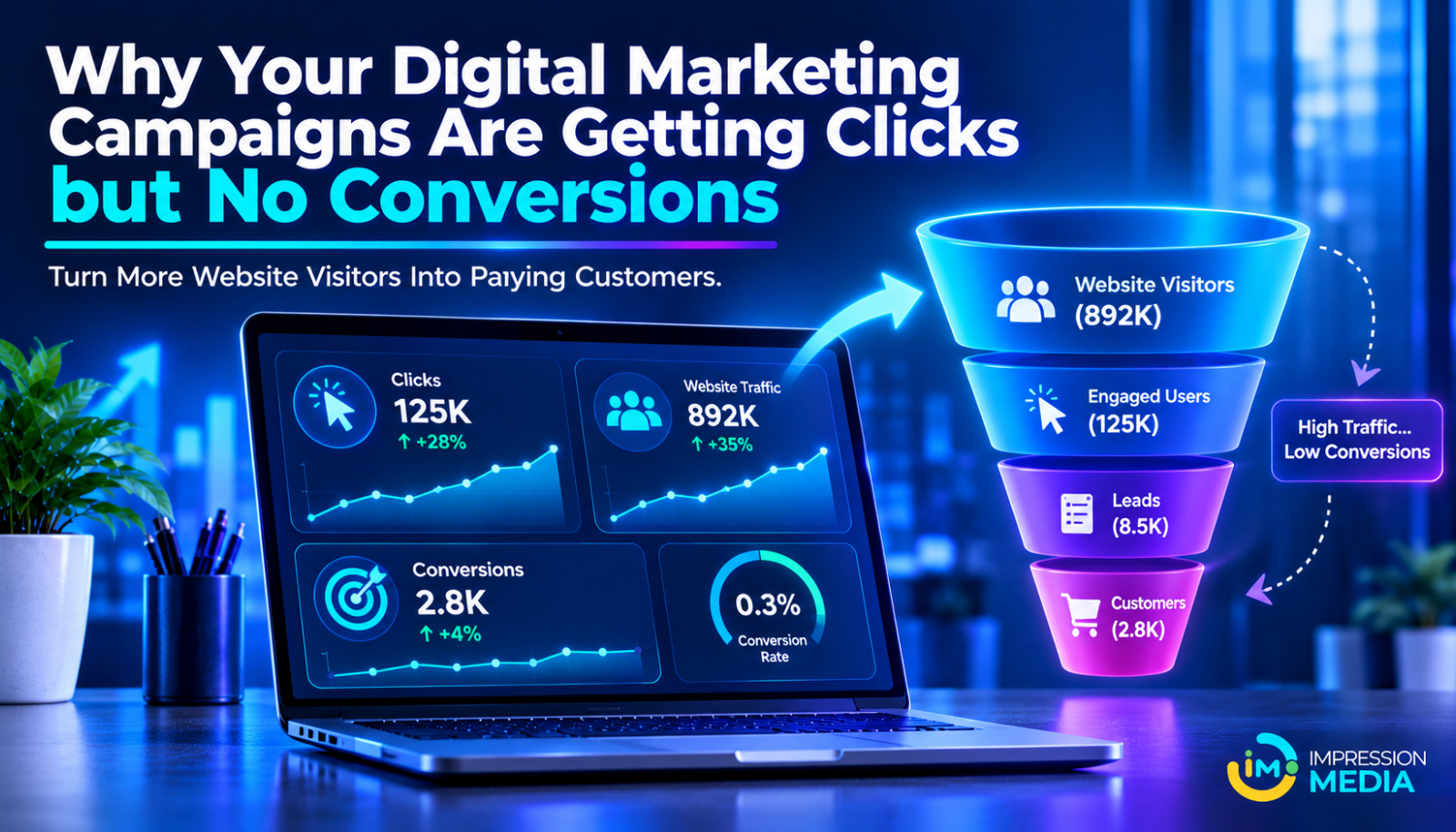
Advertising reports often highlight impressions, clicks, reach, and engagement. While these metrics help evaluate campaign activity, they do not explain the complete customer experience.
A business may generate hundreds of website visits but receive very few enquiries because something is going wrong after the click.
Identify Where Potential Customers Lose Interest
Common problems include:
- Landing pages that do not match the advertisement.
- Complicated enquiry forms.
- Unclear pricing or service information.
- Slow website loading.
- Weak calls to action.
- Delayed responses to customer enquiries.
For example, a person who clicks an advertisement for a consultation may leave if the website makes it difficult to find the booking option.
Businesses should examine the complete journey, from the first advertisement to the final enquiry or purchase. Improving each step can make marketing investments more effective.
7. They Do Not Publish Enough Useful Content
Many businesses use their online platforms primarily for promotional content. Almost every post talks about a product, service, discount, or offer.
Although promotional content has its place, audiences also need information that helps them understand a problem or make a decision.
Educational Content Builds Long-Term Visibility
Businesses can use blogs, short videos, carousels, guides, and industry updates to answer common customer questions.
For example, an accounting firm could publish tax-related educational content, while a digital marketing company could explain common SEO mistakes or website optimisation techniques.
Useful content can support several marketing objectives:
- Attracting audiences through organic search.
- Improving social media engagement.
- Answering customer questions.
- Demonstrating industry knowledge.
- Creating opportunities for content sharing.
- Supporting customer decision-making.
Rather than publishing content only when a promotion is running, businesses should create a consistent content plan based on their audience's interests.
8. They Rarely Measure Their Overall Digital Presence
Running advertisements and checking their performance is not enough to understand whether a business is building a strong online presence.
Companies need to evaluate how different marketing channels work together.
Track More Than Advertising Performance
A useful digital marketing review should consider:
| Area | What to monitor |
|---|---|
| Social media | Reach, engagement, shares, saves, and profile visits |
| SEO | Organic traffic, search visibility, and relevant keyword performance |
| Website | Traffic sources, user behaviour, and conversion rates |
| Advertising | Cost per lead, conversion rate, and return on ad spend |
| Branding | Brand searches, customer feedback, and recognition |
| Customer experience | Enquiry response time and lead quality |
These measurements help businesses understand where they are making progress and where improvements are needed.
Regular reviews also prevent companies from continuing marketing activities that generate attention without contributing to meaningful business outcomes.
9. They Treat Digital Marketing as a Short-Term Activity
A common mistake is expecting immediate results from every digital marketing activity.
Businesses may run social media campaigns for a few weeks, publish a handful of blogs, or make minor website changes and expect significant growth immediately.
However, different marketing channels work on different timelines.
Paid advertising can generate visibility quickly, while SEO and brand recognition generally require sustained effort. Social media communities also take time to develop.
Build a Long-Term Digital Marketing Plan
A sustainable strategy should connect different marketing activities instead of treating each campaign as an isolated project.
For example, a business could:
- Improve its website and service pages.
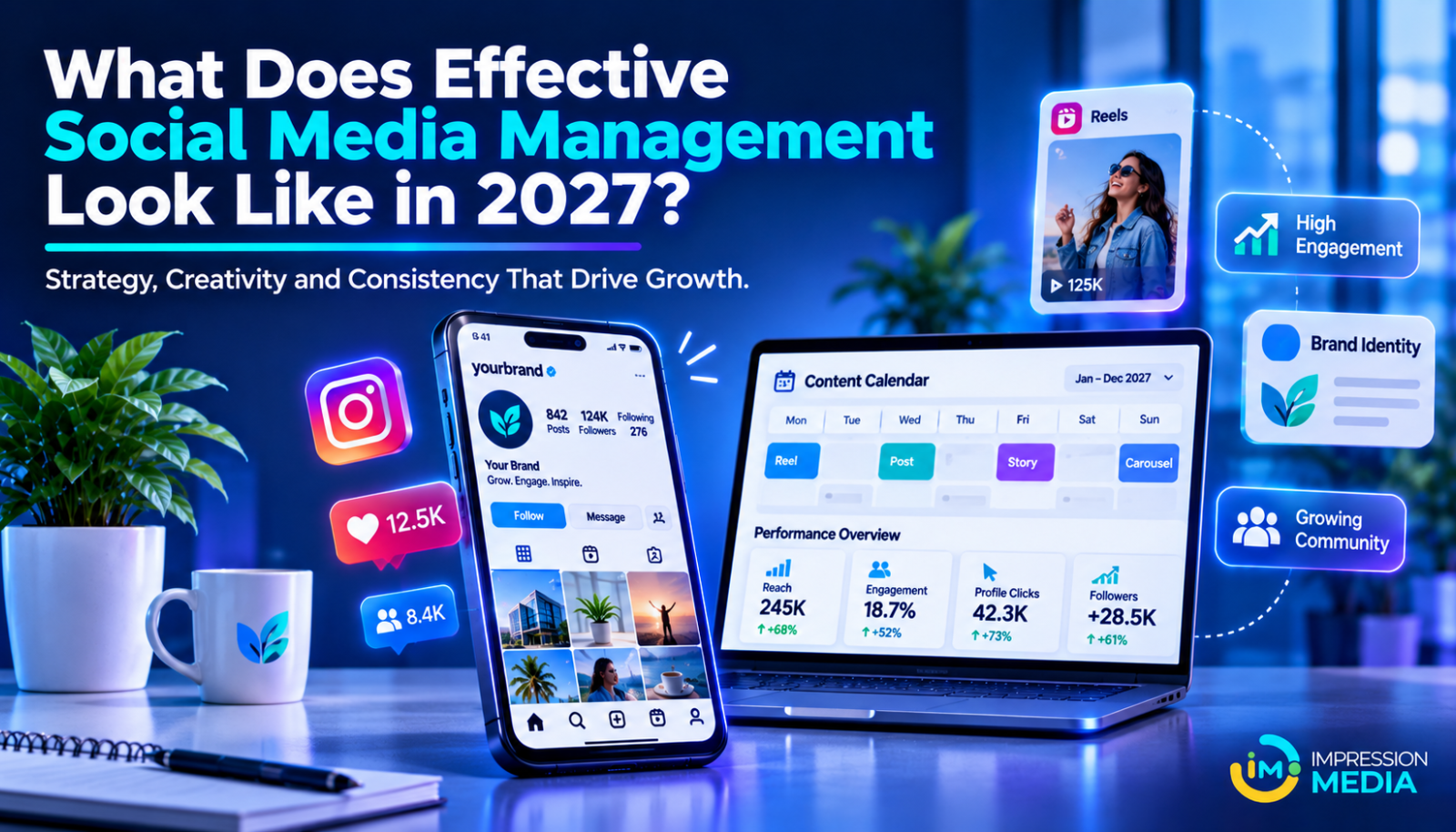
- Develop a consistent social media content calendar.
- Publish useful SEO-focused articles.
- Run targeted advertising campaigns.
- Respond promptly to customer enquiries.
- Review performance and improve the strategy.
When these activities work together, businesses can create a more complete digital presence rather than relying on individual advertising campaigns.
Conclusion: Build an Online Presence, Not Just Advertising Visibility
Advertising can help businesses attract attention, reach new audiences, and generate enquiries. However, repeatedly spending money on advertisements does not automatically create a recognisable or trusted brand.
A strong online presence develops through consistent social media communication, useful content, search visibility, professional website experiences, recognisable branding, and meaningful customer interactions.
Businesses should stop viewing advertising as their entire digital marketing strategy. Instead, they should focus on building an ecosystem where paid campaigns, organic visibility, content, and customer experience support one another.
The businesses that approach digital marketing as a continuous process have more opportunities to build recognition, earn trust, and create sustainable growth over time.