
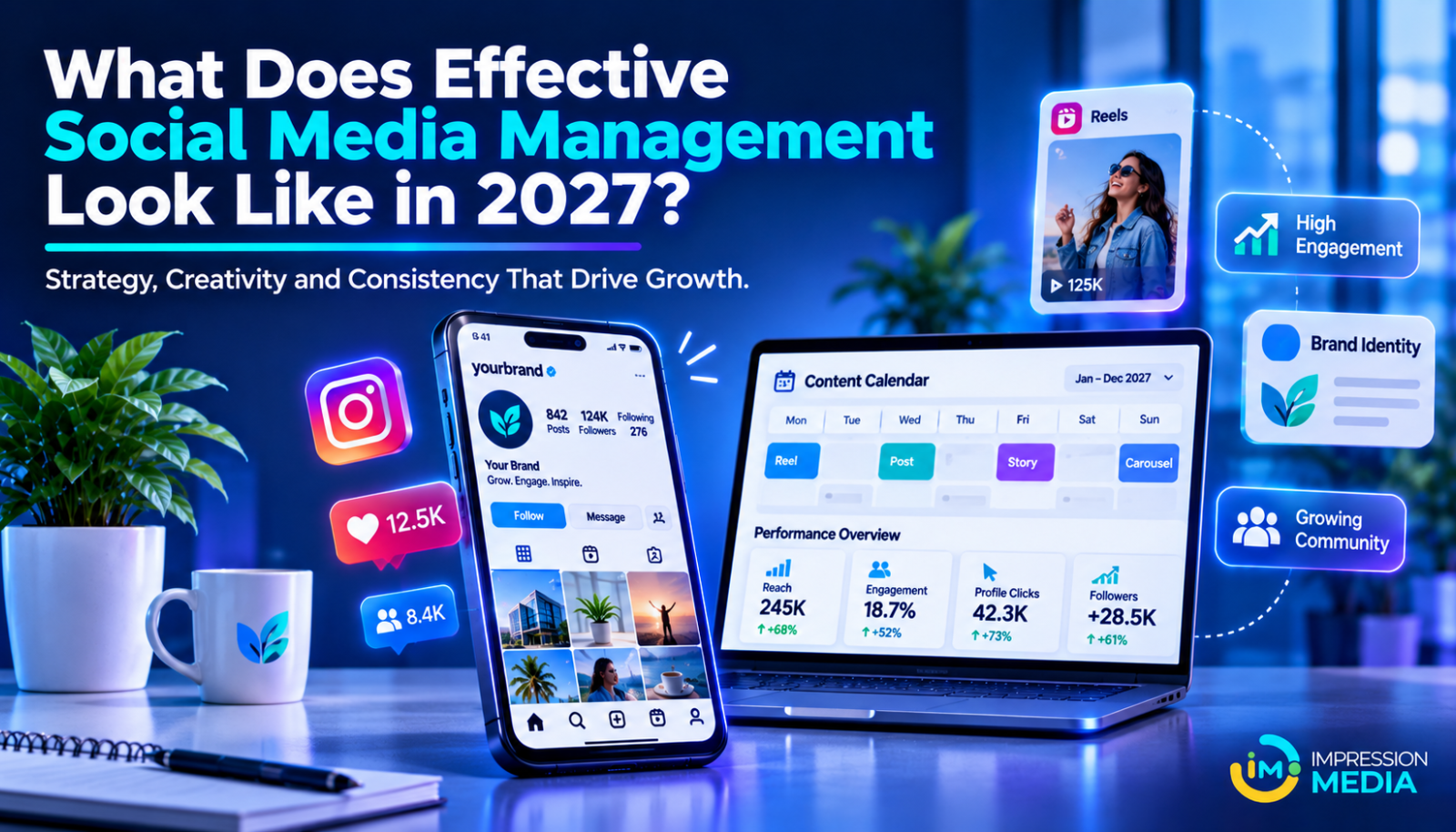
What Does Effective Social Media Management Look Like in 2027?
Social media has become much more than a platform for sharing updates and promoting products. For businesses, it is an important part of brand communication, customer engagement, reputation building, and digital growth.
However, simply maintaining accounts on Instagram, Facebook, LinkedIn, or other platforms does not guarantee meaningful results. Businesses need a clear strategy, relevant content, consistent communication, and a way to measure performance.
As social media continues to evolve, effective management in 2027 will require businesses to focus on more than posting frequently or gaining followers. It will involve understanding audience behaviour, using new content formats, maintaining brand consistency, and connecting social media activities with wider business objectives.
Here is what an effective social media management strategy should include in 2027.
1. A Clear Strategy Built Around Business Goals
Successful social media management begins with a clear understanding of what a business wants to achieve. Without defined objectives, content creation and publishing can become repetitive activities with little measurable impact.
Set Specific Social Media Objectives
Businesses should identify the primary purpose of their social media presence. Common objectives include:
- Increasing brand awareness and visibility.
- Generating relevant enquiries and leads.
- Driving traffic to websites and landing pages.
- Building customer relationships.
- Promoting products and services.
- Establishing industry credibility.
For example, a local business may focus on reaching customers within a specific location, while a B2B company may prioritise professional content that builds credibility among decision-makers.
Every content and campaign decision should support at least one business objective.
2. Platform-Specific Content Instead of Identical Posts Everywhere
Publishing the same content across every social media platform may save time, but it does not always produce the best results. Different platforms attract different audiences and encourage different types of interactions.
Understand What Works on Each Platform
An effective social media management strategy considers the strengths of individual platforms:
- Instagram: Reels, Stories, carousels, and visual storytelling can help brands connect with audiences.
- Facebook: Community updates, local promotions, videos, and customer interactions can support business visibility.
- LinkedIn: Industry insights, professional updates, case studies, and thought leadership help businesses build credibility.
- YouTube: Educational videos, product demonstrations, and detailed explanations can support audience discovery.
Businesses should adapt their messaging, creative formats, and publishing approach to suit each platform rather than simply duplicating posts.
3. Consistent and Recognisable Brand Communication
A business should feel like the same brand wherever customers encounter it. Inconsistent messaging, visual styles, and communication can make it harder for audiences to recognise and remember a company.
Maintain a Consistent Brand Voice
Brand voice defines how a business communicates with its audience. Some brands use a professional and informative tone, while others prefer a friendly and conversational approach.
The important thing is to maintain a recognisable style across captions, comments, videos, and promotional campaigns.
Keep Visual Identity Consistent
Businesses should maintain a consistent approach to colours, typography, logo placement, graphic styles, and image quality.
This does not mean every post must look identical. Creative variety is important, but the overall visual identity should remain recognisable.
4. Valuable Content That Goes Beyond Promotions
Audiences do not follow business accounts just to see advertisements. They also look for useful information, entertainment, inspiration, and content that helps them make decisions.
Create a Balanced Content Mix
An effective content plan should include different types of posts, such as:
- Educational tips and industry insights.
- Product and service demonstrations.
- Customer testimonials and experiences.
- Behind-the-scenes updates.
- Reels and short-form videos.
- Company news and announcements.
- Promotional campaigns and offers.
For example, a digital marketing agency can share practical marketing advice, campaign insights, website improvement tips, and client success stories instead of publishing only service advertisements.
The objective is to make the brand worth following, not just visible in the feed.
5. Short-Form Video as an Important Content Format
Short-form video continues to play an important role in social media content strategies. Instagram Reels, YouTube Shorts, and other video formats give businesses opportunities to communicate ideas quickly and introduce their brands to new audiences.
Focus on Strong Openings and Useful Information
The first few seconds of a video should give viewers a reason to continue watching.
Businesses can experiment with:
- Questions that address common customer problems.
- Quick product demonstrations.
- Before-and-after comparisons.
- Short educational explanations.
- Behind-the-scenes business activities.
Good video content does not always require expensive equipment. Clear visuals, understandable audio, relevant messaging, and thoughtful editing are often more important than unnecessary production effects.
6. Active Community Management and Customer Communication
Social media management does not end when a post is published. Businesses also need to pay attention to the conversations happening around their content and brand.
Respond to Comments and Direct Messages
Timely and helpful responses can improve the customer experience and make a business appear more approachable.
Businesses should regularly monitor comments, direct messages, mentions, and customer feedback. They should also establish clear guidelines for handling complaints and sensitive conversations.
Use Social Listening to Understand Audience Needs
Social listening involves monitoring conversations, customer opinions, industry discussions, and brand mentions.
These insights can help businesses identify common questions, understand customer expectations, discover content opportunities, and recognise potential reputation issues.
Instead of treating comments and messages as routine tasks, businesses can use them as a source of valuable audience information.
7. Smarter Use of AI and Social Media Management Tools
AI-powered tools are changing how businesses plan, create, organise, and analyse social media content. In 2027, these tools can support marketing teams by reducing repetitive work and improving efficiency.
Use AI to Support Content Planning
AI tools can help businesses brainstorm content ideas, create initial caption drafts, organise content calendars, and summarise performance reports.
However, automatically generated content should always be reviewed and refined. Generic captions, repetitive visuals, and inaccurate information can weaken brand communication.
Automate Repetitive Tasks Without Losing the Human Touch
Scheduling tools can help teams plan posts in advance, while reporting tools can simplify performance monitoring.
Automation should support the workflow rather than replace genuine customer interaction. Personal responses, creative decisions, and brand communication still require human judgement.
8. Data-Driven Monitoring and Performance Reporting
Posting regularly is not the same as achieving results. Businesses need to understand how their content performs and whether their social media activities contribute to their objectives.
Track the Right Social Media Metrics
The most useful metrics depend on the campaign goal. Businesses can monitor:
- Reach and impressions: To understand content visibility.
- Engagement rate: To evaluate audience interaction.
- Saves and shares: To identify content people find useful or worth sharing.
- Profile visits: To measure interest in the brand.
- Website clicks: To understand traffic generated through social media.
- Leads and conversions: To evaluate business outcomes.
Use Reports to Improve Future Decisions
Regular performance reports help businesses identify successful content formats, understand audience preferences, and recognise areas that need improvement.
Rather than focusing only on follower growth, teams should examine whether social media activities are producing relevant engagement, enquiries, website visits, or sales.
9. A Consistent Publishing and Optimisation Process
Even a strong strategy needs a practical execution plan. Without proper organisation, businesses may struggle to maintain content quality and publishing consistency.
Build a Manageable Content Calendar
A social media calendar helps teams organise content themes, formats, publishing dates, campaigns, and responsibilities.
It also makes it easier to plan seasonal promotions, product launches, and important business announcements.
Review and Improve the Strategy Regularly
Social media trends, audience preferences, and platform features change over time. Businesses should review their strategy regularly rather than following the same approach throughout the year.
Analyse performance, test new content ideas, update creative formats, and adjust publishing plans based on actual audience behaviour.
Conclusion: Effective Social Media Management Is About Meaningful Results
Effective social media management in 2027 will require a combination of strategy, creativity, consistency, technology, and performance analysis.
Businesses need to understand their audiences, create platform-specific content, maintain a recognisable brand identity, participate in conversations, and measure the outcomes of their activities.
The focus should not be on publishing more posts or collecting followers without a clear purpose. It should be on building a meaningful social media presence that supports brand visibility, customer relationships, and long-term business growth.
For businesses that want to manage their social media presence more strategically, working with an experienced social media management team can bring content planning, creative development, community management, and performance monitoring together.