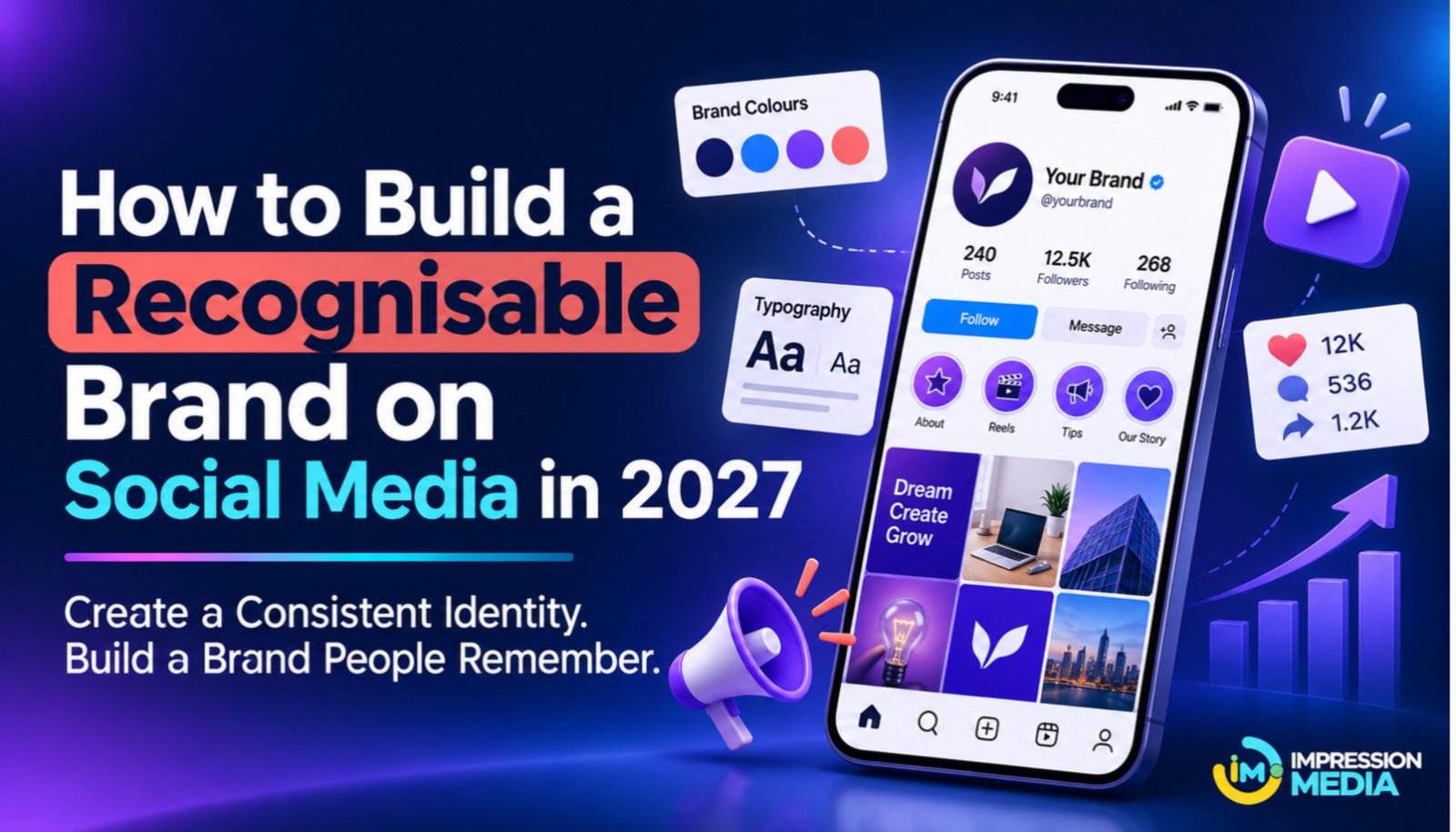

How to Build a Recognisable Brand on Social Media in 2027
Social media gives businesses an opportunity to reach thousands of potential customers, but getting noticed is only the first step. The real challenge is making people remember your brand after they have scrolled past your content.
Many businesses publish regularly, experiment with different formats and follow popular trends. However, without a consistent identity and a clear content strategy, their social media presence can feel disconnected. People might see their posts without recognising the business behind them.
Building a recognisable brand on social media requires more than attractive graphics or frequent posting. It involves creating a consistent visual identity, developing a distinctive brand voice, sharing meaningful content and giving audiences a reason to remember you.
In 2027, businesses that approach social media with a clear branding strategy can build stronger recognition, improve audience trust and create a more memorable online presence.
1. Establish a Clear Brand Identity Before Creating Content
Before planning social media posts, businesses need to understand what they want their brand to communicate. A recognisable brand starts with a clear identity that remains consistent across different platforms and content formats.
Your brand identity should communicate what your business does, who it serves and what makes it different.
Define Your Brand's Personality
Think about how you want people to perceive your business. Should your brand feel professional, friendly, creative, innovative or approachable?
Choose a few characteristics that reflect your business values and use them as a guide when creating content.
For example, a technology company might adopt a knowledgeable and straightforward personality, while a lifestyle brand may use a more expressive and conversational approach.
Identify What Makes Your Brand Different
Customers encounter numerous businesses offering similar products and services. Your brand needs a clear point of distinction.
Consider your expertise, service approach, product quality, customer experience or business philosophy. These elements can help shape your messaging and make your content more specific to your brand.
2. Maintain Consistent Visual Branding
Visual consistency helps audiences recognise your business even before they read the account name. When people repeatedly encounter similar colours, typography, design elements and image styles, they gradually associate those visual details with your brand.
This does not mean every social media post should look identical. Instead, your content should follow a recognisable design language.
Choose a Consistent Colour Palette and Typography
Select a primary colour palette that reflects your brand personality. Use a limited combination of colours across social media graphics, videos, stories and promotional creatives.
Typography also matters. Using too many unrelated fonts can make your content look inconsistent. Choose a small set of fonts for headlines, supporting text and other design elements.
Develop a Recognisable Content Style
Your brand's visual style should extend beyond colours and fonts. Consider the type of photography, illustrations, video transitions, graphic layouts and composition you use.
For instance, a business that prefers a clean and minimal appearance should maintain that direction across its social media content.
A consistent visual approach makes your posts easier to associate with your business, even when individual designs vary.
3. Create a Distinctive Brand Voice
Visual identity helps people recognise a brand, while its voice helps them understand its personality.
A brand that communicates differently in every post may struggle to establish a clear identity. Consistent language and messaging make your business feel more familiar and trustworthy.
Decide How Your Brand Communicates
Establish a tone that suits your audience and business objectives. It could be informative, conversational, professional, friendly or inspiring.
For example, a business targeting other companies may use clear and informative language, while a consumer-focused brand may adopt a more casual tone.
The objective is not to use the same words in every caption. It is to maintain a consistent personality across different conversations.
Keep Your Messaging Clear and Relevant
Avoid complicated language, unnecessary industry jargon and vague promotional statements.
Your social media captions should communicate useful information, explain benefits or encourage meaningful interaction. When your messaging consistently reflects your brand's values, audiences begin to understand what your business represents.
4. Develop Content Pillars That Reflect Your Brand
Publishing random content makes it difficult to establish a clear identity. Content pillars help businesses maintain direction while providing enough variety to keep their social media presence interesting.
Content pillars are a group of recurring themes that guide what a brand publishes.
Choose Relevant Content Categories
Most businesses can build their social media strategy around four or five content pillars, such as:
- Educational content: Share practical tips, industry knowledge and useful information.
- Behind-the-scenes content: Show your workplace, team, creative process and everyday activities.
- Product or service content: Demonstrate what you offer and explain how it solves customer problems.
- Customer-focused content: Share testimonials, experiences and frequently asked questions.
- Brand storytelling: Communicate your business journey, values, achievements and milestones.
These categories help maintain a balance between promotional and informative content.
Maintain a Balance Between Content Formats
Not every message needs to be delivered through a static graphic. Businesses can use carousels, short-form videos, Reels, stories and photographs to communicate different ideas.
For example, a quick industry tip may work well as a Reel, while a detailed explanation might be better suited to a carousel.
The format can change, but the central brand identity should remain recognisable.
5. Use Short-Form Videos to Strengthen Brand Recognition
Short-form video has become an important part of social media communication. Platforms such as Instagram, YouTube and TikTok give businesses opportunities to introduce their brands to audiences through engaging visual content.
However, creating videos simply to follow trends may not contribute much to long-term brand recognition.
Businesses should use short-form videos to communicate their personality, demonstrate expertise and make their products or services easier to understand.
Create Videos Around Your Brand's Strengths
Rather than relying entirely on promotional videos, explore different formats that help audiences understand your business. Some useful ideas include:
- Quick demonstrations of products or services.
- Behind-the-scenes videos showing how your business operates.
- Short educational videos answering common customer questions.
- Team introductions and workplace moments.
- Customer experiences and testimonials.
- Industry insights presented in simple language.
These formats give audiences more ways to connect with your brand.
Make Your Videos Visually Consistent
Use recognisable visual elements in your videos, such as consistent colours, opening styles, typography, subtitles and editing techniques.
You do not need to use the same template for every video. However, maintaining a familiar visual direction can make your content easier to identify.
Pay attention to the opening few seconds as well. A clear opening message or interesting visual can encourage viewers to continue watching.
6. Adapt Your Content to Each Social Media Platform
Businesses often make the mistake of publishing exactly the same content across every social media platform. Although maintaining consistency is important, each platform has different audience behaviours and content preferences.
A strong social media branding strategy adapts the presentation without changing the brand's core identity.
Understand the Role of Each Platform
Consider how different platforms can support your brand:
- Instagram: Build visual recognition through Reels, carousels, stories and creative posts.
- Facebook: Share business updates, community content, videos and customer-focused information.
- LinkedIn: Establish professional credibility through industry insights, company updates and expertise.
- YouTube: Develop deeper audience connections through Shorts, educational videos and longer-form content.
- TikTok: Experiment with creative short-form videos, storytelling and platform-specific trends.
Not every business needs to maintain an active presence everywhere. Focus on the platforms that are relevant to your target audience.
Keep Your Brand Identity Consistent Across Platforms
Your profile image, business description, brand colours, messaging and overall presentation should communicate a consistent identity.
Even when the content format changes, people should be able to recognise that the communication comes from the same business.
7. Build Recognition Through Consistent Publishing
Brand recognition develops through repeated exposure. When audiences regularly encounter useful and familiar content from a business, they have more opportunities to remember its identity.
However, consistency does not mean publishing multiple posts every day. A realistic publishing schedule is more valuable than an ambitious schedule that cannot be maintained.
Create a Practical Content Calendar
Plan your content in advance to maintain a steady publishing routine. A content calendar can include:
- Content topic and objective.
- Platform and format.
- Publishing date.
- Caption and creative requirements.
- Relevant campaign or promotional activity.
Planning also makes it easier to identify gaps in your content and avoid repeating the same ideas.
Prioritise Quality and Relevance
Posting frequently will not automatically make a brand more recognisable. Content should offer something useful, interesting or relevant to the intended audience.
A smaller number of well-planned posts can create a stronger impression than a large volume of repetitive content.
8. Engage With Your Audience and Build Relationships
Social media branding is not limited to publishing content. It also depends on how businesses interact with people who follow, comment on or contact them.
A brand that communicates with its audience feels more approachable than one that only publishes promotional messages.
Respond to Comments and Messages
Respond to relevant comments, answer questions and acknowledge feedback. Timely and helpful communication shows that your business values audience interaction.
It also gives businesses an opportunity to understand what customers expect from their products or services.
Encourage Meaningful Conversations
Use questions, polls, interactive stories and discussion-based posts to encourage participation.
Instead of asking for engagement without context, create conversations around topics your audience genuinely cares about.
Over time, these interactions can help your brand develop a more familiar relationship with its audience.
9. Measure Brand Recognition Beyond Likes and Followers
Likes and follower counts are visible indicators of social media activity, but they do not provide a complete picture of brand recognition.
Businesses should track metrics that help them understand whether their content is reaching new people and creating meaningful interest.
Monitor the Right Social Media Metrics
Some useful metrics include:
- Reach: The number of unique accounts that see your content.
- Impressions: How many times your content is displayed.
- Shares: How frequently people share your posts with others.
- Saves: How often users save your content for later.
- Profile visits: How many people visit your business profile.
- Branded searches: Whether more people are searching for your business name.
- Audience mentions: How frequently people mention or tag your brand.
These indicators can help businesses understand which content formats and topics are contributing to stronger visibility and recognition.
Use Insights to Improve Your Content Strategy
Review your performance regularly to identify patterns. Look at which posts receive more shares, which videos attract relevant viewers and which topics encourage profile visits.
Use these observations to refine future content rather than repeating formats that consistently underperform.
10. Give Your Audience a Consistent Brand Experience
Your social media profile is often one of the first places potential customers encounter your business. However, recognition can weaken if the experience changes significantly when they visit your website or contact your company.
Brand consistency should extend beyond social media posts.
Align Your Social Media and Website Identity
Your website should reflect the same visual identity, messaging and personality as your social media profiles.
Use consistent brand colours, logos, typography and language wherever possible. This creates a more connected experience for people moving between platforms.
Maintain Consistency Across Customer Touchpoints
Consider how your brand appears in advertisements, email communication, website pages, customer support and other marketing materials.
Every interaction contributes to how people perceive your business. A consistent experience makes it easier for customers to understand and remember your brand.
Conclusion: Build a Brand People Can Recognise and Remember
Building a recognisable brand on social media in 2027 requires more than following trends or publishing content regularly. It involves creating a clear identity, maintaining visual consistency, developing a distinctive voice and sharing content that reflects what your business stands for.
Short-form videos, Reels, educational posts and audience interactions can all contribute to stronger brand recognition when they are part of a well-planned strategy.
Most importantly, businesses should focus on creating a consistent experience across every platform. When audiences repeatedly encounter a familiar identity, relevant messages and valuable content, they have more reasons to remember the brand.
The goal is not simply to make your business visible. It is to make your brand recognisable, relatable and worth remembering.