
Why Your Business Needs a Consistent Digital Presence, Not Just Advertisements
Running advertisements can help a business reach new audiences, promote offers and attract potential customers. A well-planned advertising campaign can generate attention quickly, but what happens when the campaign ends?
If your business depends entirely on paid advertisements, your online visibility may become inconsistent. People might see your ads today, visit your website and check your social media profiles, only to find very little information about your business beyond the promotion.
This can create a gap between attracting attention and building trust.
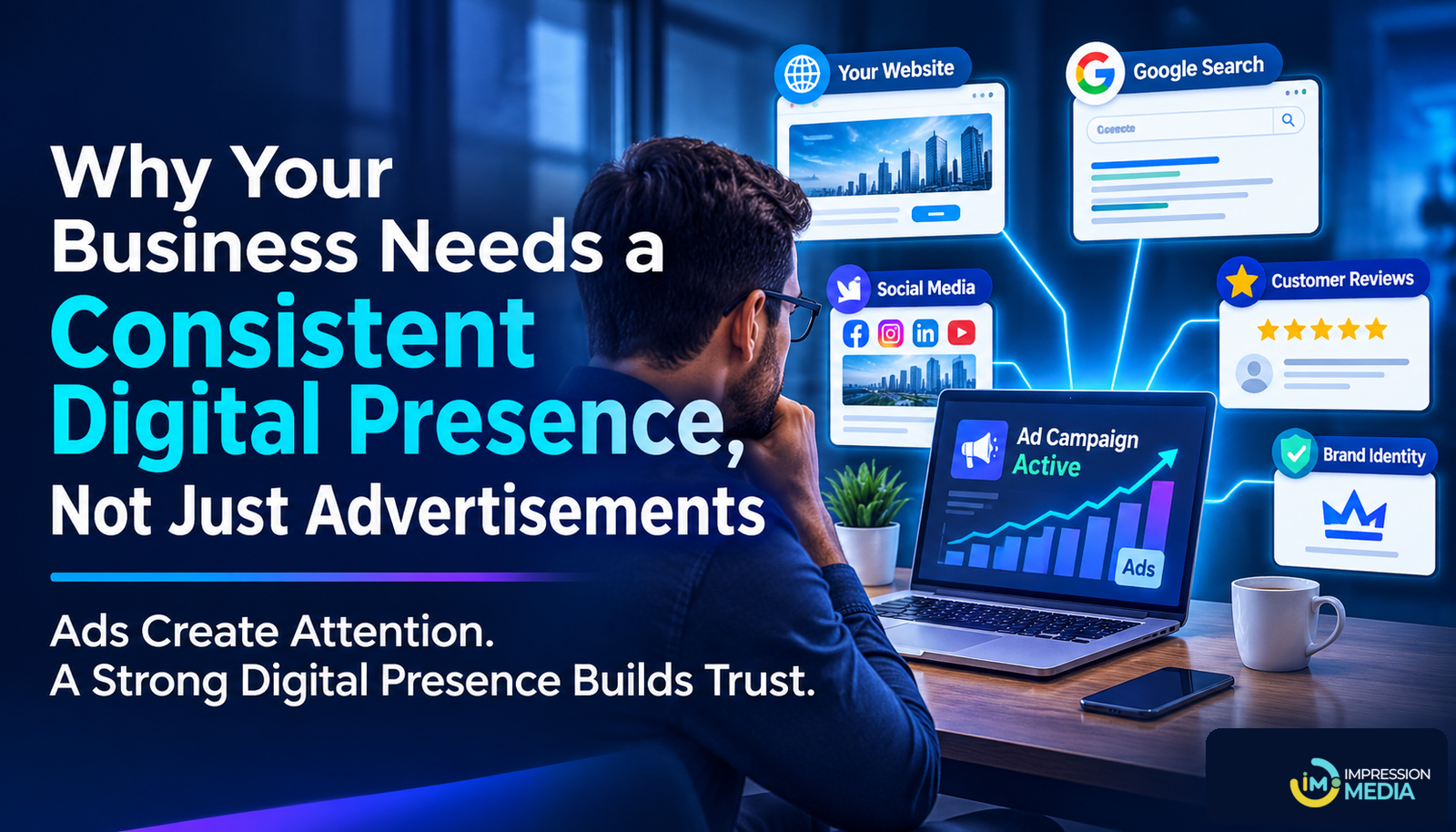
A strong digital presence involves more than running advertisements. It includes your website, search engine visibility, social media activity, useful content, customer reviews and the overall experience people have when interacting with your brand online.
For small businesses, these elements work together to create familiarity and credibility. Instead of relying only on paid campaigns to remain visible, businesses can build a consistent online presence that continues to support their growth over time.
1. Advertisements Create Visibility, but Consistency Builds Recognition
Paid advertisements are useful for introducing your business to people who may not have heard about it before. They can help promote a new product, announce an offer or bring visitors to a landing page.
However, seeing an advertisement once does not necessarily mean someone will remember your business.
People often need multiple interactions with a brand before they become familiar with it. If your business appears in an advertisement but has little activity elsewhere online, it may be harder for potential customers to recognise and remember it.
Why Brand Recognition Requires Regular Visibility
Consider someone who sees an advertisement for a local interior design company. They may become interested and search for the business online.
If they find an updated website, completed project photographs, helpful articles and an active social media profile, they get more opportunities to understand the company.
These interactions reinforce the brand beyond the original advertisement.
A consistent digital presence helps businesses remain recognisable across different online platforms rather than depending on occasional advertising exposure.
2. Your Website Gives Potential Customers a Place to Learn About Your Business
Social media advertisements and promotional campaigns can attract attention, but your website gives visitors a central place to explore your business in greater detail.
People may want to understand what you offer, how your services work, where you operate and how they can contact you.
If your website is outdated, difficult to navigate or missing important information, potential customers may hesitate to take the next step.
What Your Business Website Should Communicate
A useful business website should clearly explain:
- What products or services you provide.
- Who your offerings are suitable for.
- What makes your business different.
- How customers can contact you.
- Where your business operates, if relevant.
- What evidence supports your experience and credibility.
Your website should also work properly on mobile devices and make important information easy to find.
Advertisements may bring visitors to your website, but the website experience influences what they do next.
3. SEO Helps Customers Discover Your Business Without Relying Only on Ads
Paid advertising can provide immediate exposure while a campaign is running. Search engine optimisation offers another way for potential customers to discover your business.
When people search Google for products, services or answers to specific questions, relevant pages from your website may appear in organic search results.
This creates opportunities to attract visitors who are already looking for information related to your business.
How Organic Search Supports Long-Term Visibility
For example, a small web development company could publish useful articles about website maintenance, WordPress security and website design costs.
Someone searching for these topics may discover the company's content, visit its website and explore its services.
This does not mean every article will generate customers. However, useful content can create additional entry points through which people discover your business.
Why SEO Needs Consistent Attention
SEO is not a one-time activity. Search behaviour changes, competitors publish new content and website requirements evolve.
Businesses should regularly review their website performance, update important pages, improve existing content and identify relevant search opportunities.
Unlike paid advertisements, organic search visibility does not require payment for every click. However, SEO still requires time, expertise and ongoing investment.
4. Social Media Keeps Your Business Connected With Its Audience
Social media provides businesses with an opportunity to communicate regularly with existing and potential customers.
An advertisement may introduce someone to your brand, but your social media profiles can give them a better understanding of what your business does and how it operates.
A profile that has not been updated for several months may create a different impression from one that regularly shares useful information, customer experiences and business updates.
What Consistent Social Media Activity Looks Like
A business does not need to publish promotional content every day. Instead, it can maintain a balanced content strategy that includes:
- Product and service demonstrations.
- Educational posts and quick tips.
- Behind-the-scenes videos.
- Customer feedback and experiences.
- Team introductions.
- Industry updates and relevant news.
- Business announcements.
The objective is to provide audiences with useful reasons to interact with your brand.
Why Quality Matters More Than Posting Frequency
Publishing several posts every day does not automatically improve engagement or business visibility.
A smaller number of relevant, well-planned posts may communicate your brand more effectively than frequent content created without a clear purpose.
Focus on maintaining a realistic schedule, consistent visual identity and a recognisable brand voice.
5. Useful Content Helps Build Trust Before Customers Contact You
Potential customers often research a business before making a purchase or requesting a service.
They may read blog articles, watch videos, compare service pages or look for answers to questions about a particular product.
If your business provides useful information, it gives people an opportunity to understand your knowledge and approach before they contact you.
Different Content Formats Support Different Customer Needs
You can use multiple content formats to communicate with your audience:
- Blog articles: Explain industry topics, answer questions and provide practical guidance.
- Short-form videos: Demonstrate products, share quick tips and introduce your team.
- Case studies: Show how your business approaches real projects.
- Infographics: Present complicated information in an easier-to-understand format.
- Guides and resources: Help potential customers make informed decisions.
For example, an accounting firm could publish articles about common tax mistakes, create short videos explaining financial terms and share practical business finance tips.
This content helps people understand the business without requiring every interaction to be a direct sales message.
6. Customer Reviews Strengthen Your Online Reputation
Before choosing a business, many customers look for reviews and feedback from other people.
Positive customer experiences can provide reassurance, while unanswered complaints or outdated business information may create uncertainty.
This makes online reputation an important part of a consistent digital presence.
How Businesses Can Manage Their Online Reputation
Businesses should pay attention to customer feedback across relevant platforms. Some practical steps include:
- Encourage genuine customers to share their experiences.
- Respond professionally to positive and negative reviews.
- Keep business details accurate across online listings.
- Address recurring complaints instead of ignoring them.
- Share genuine customer testimonials with permission.
For local businesses, maintaining an accurate Google Business Profile is particularly useful because customers may use it to check location, operating hours, contact details and reviews.
Remember that reviews should reflect real customer experiences. Avoid purchasing fake reviews or offering incentives in ways that violate platform policies.
7. Consistent Branding Makes Your Business Easier to Recognise
Your business may appear on Google, Instagram, Facebook, LinkedIn and other platforms. If every platform communicates a completely different identity, customers may struggle to recognise your brand.
Brand consistency does not mean every post must look identical. It means maintaining a recognisable visual and communication style across different customer touchpoints.
Elements That Should Remain Consistent
Pay attention to:
- Logo usage and brand colours.
- Typography and visual design.
- Tone of voice and messaging.
- Business descriptions and service information.
- Contact details and website links.
- The overall quality of published content.
For example, if your website presents your business as a professional technology company but your social media profiles use inconsistent branding and outdated information, the overall experience may feel disconnected.
A consistent identity helps create a more familiar and professional impression.
8. A Consistent Digital Presence Reduces Dependence on Paid Advertising
Paid advertising can be an important part of business growth, but depending on it as the only source of online visibility can create challenges.
When campaigns stop, the traffic and exposure generated by those advertisements may decrease.
A broader digital strategy creates additional ways for customers to discover and interact with your business.
How Different Digital Channels Work Together
Consider how these channels support one another:
- SEO helps people discover your website through relevant searches.
- Social media keeps your business visible and encourages interaction.
- Content marketing provides useful information and builds familiarity.
- Your website explains your offerings and supports customer enquiries.
- Online reviews provide social proof and strengthen credibility.
- Paid advertising helps you reach targeted audiences and promote specific campaigns.
These channels do not need to operate independently. A useful blog article can be shared on social media, promoted through an advertisement and linked from a relevant service page.
This creates more value from individual marketing activities.
9. Your Digital Presence Should Support the Entire Customer Journey
Not every person who discovers your business is ready to purchase immediately.
Some people are still researching their options, while others are comparing providers or looking for proof that a business can meet their needs.
If your digital presence focuses only on advertisements and immediate sales, you may overlook people who need more information before making a decision.
Understanding the Different Stages
A simple customer journey can be divided into three stages:
- Awareness: People discover your business through Google, social media, advertisements or recommendations.
- Consideration: They visit your website, read articles, compare services and explore customer reviews.
- Decision: They contact your business, request a quotation, book a service or make a purchase.
Your digital content should support each stage.
For example, an educational blog post may help someone understand a problem, a detailed service page may explain your solution, and a testimonial may give them additional confidence before contacting you.
A connected digital presence makes this journey easier to navigate.
10. How to Build a Consistent Digital Presence for Your Business
Building an effective digital presence does not require every business to use every available platform. The better approach is to identify where your audience spends time and focus on maintaining useful, accurate and consistent information.
Here are some practical steps to get started.
Start With Your Website
Review your website to ensure that your services, contact details, business information and important pages are up to date.
Make sure the website is mobile-friendly, easy to navigate and provides clear next steps for visitors.
Improve Your Search Visibility
Identify relevant keywords and questions your potential customers search for. Optimise important website pages and publish useful content that addresses those needs.
Use Google Search Console to monitor impressions, clicks, indexing and organic search performance.
Create a Realistic Social Media Plan
Choose the platforms that make sense for your business. Plan a mix of educational, promotional, entertaining and informative content.
Maintain a manageable publishing schedule rather than trying to post everywhere every day.
Maintain Your Online Business Information
Check your business name, address, contact details, operating hours and website links across relevant platforms.
Update your Google Business Profile and respond to customer feedback where appropriate.
Measure More Than Advertising Results
Do not evaluate your entire digital marketing strategy based only on advertising clicks or impressions.
Track website traffic, organic search performance, social media engagement, enquiries and conversions. These indicators help you understand whether your digital presence is supporting actual business goals.
Final Thoughts
Advertisements can introduce your business to new audiences and help generate attention, but they are only one part of building a recognisable brand.
A consistent digital presence gives potential customers more opportunities to discover your business, understand your services, evaluate your credibility and decide whether they want to work with you.
Your website, SEO, social media, content, online reputation and paid campaigns should support one another rather than operate as disconnected activities.
For small businesses, the goal should not be to spend more simply to remain visible. It should be to build a useful and trustworthy online presence that continues to create opportunities beyond individual advertising campaigns.