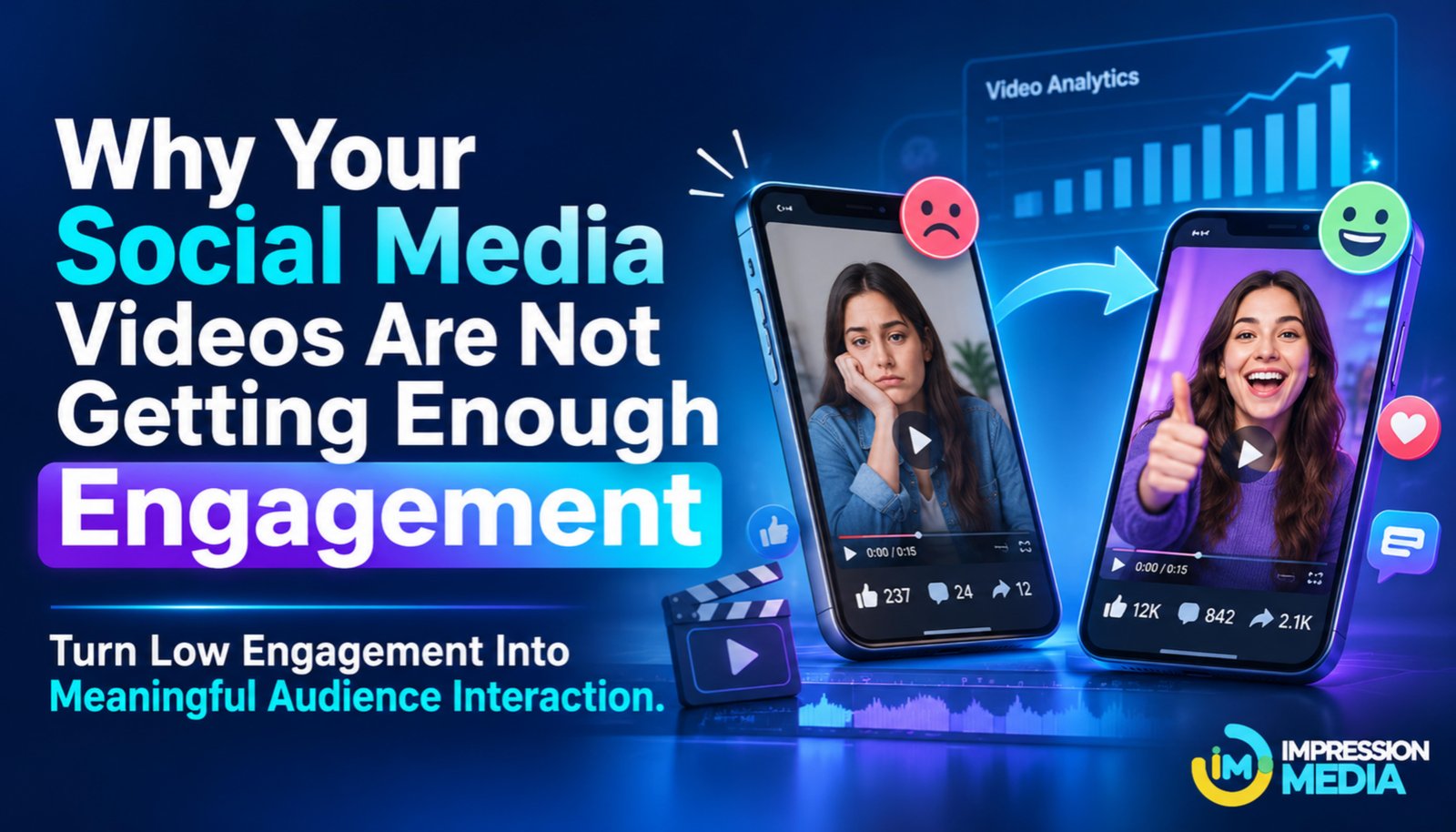
Why Your Social Media Videos Are Not Getting Enough Engagement
Creating and publishing videos has become a regular part of social media marketing for many businesses. Brands use short videos, product demonstrations, behind-the-scenes clips and promotional content to connect with their audiences. Yet, despite putting time and effort into video creation, many businesses struggle to get likes, comments, shares or meaningful interactions.
A video may receive a few views but very little engagement. Another may attract attention initially, only for viewers to scroll away after a few seconds. This can be frustrating, especially when a business invests in planning, recording and editing content.
The problem is not always video quality or posting frequency. Sometimes, the content does not match what the audience wants to watch. In other cases, the message is unclear, the opening fails to capture attention or the video does not encourage viewers to interact.
Understanding these issues can help businesses create more relevant social media videos and build stronger connections with their audiences.
1. Your Videos Do Not Capture Attention Quickly Enough
Social media users scroll through large amounts of content every day. They often decide within the first few seconds whether a video is worth watching. If the opening feels slow, predictable or unrelated to their interests, they may move on before reaching the main message.
Starting every video with a logo animation, a long introduction or a generic greeting can make it harder to hold attention.
For example, a business offering website development services could begin with, "Is your website losing potential customers because it loads too slowly?" This immediately introduces a problem that its target audience may recognise.
Instead of delaying the main message, start with something that gives viewers a reason to continue watching.
2. Your Content Is Too Promotional
One common reason business videos receive limited engagement is that they focus too heavily on selling.
Videos that repeatedly announce discounts, promote services or ask viewers to make purchases may not give people enough reason to interact. Most users do not open social media specifically to watch advertisements. They also look for entertainment, useful information, inspiration and relatable experiences.
This does not mean businesses should stop creating promotional videos. Instead, promotional content should be balanced with other formats.
Consider creating videos that:
- Answer common customer questions.
- Explain how a product or service works.
- Share practical tips related to your industry.
- Show the people and processes behind your business.
- Address problems your potential customers experience.
When viewers find your content useful, they have a stronger reason to watch, save or share it.
3. You Are Not Creating Content for a Specific Audience
A video designed for everyone may fail to connect with anyone in particular.
Different audiences have different interests, expectations and problems. A restaurant owner may want ideas for attracting more local customers, while a technology business owner may be interested in improving website security or automating everyday tasks.
If your videos cover unrelated topics without a clear audience in mind, viewers may struggle to understand what your business offers and why they should follow your page.
Before planning a video, consider:
- Who is most likely to watch it?
- What problem or question does the video address?
- What information would this audience find useful?
- Why would someone share or save this content?
You do not need to create complicated audience profiles for every video. A basic understanding of your ideal customers can make your content more focused and relevant.
4. Your Videos Are Too Long or Poorly Structured
Long videos are not automatically unsuccessful. However, a video that takes too much time to communicate a simple message can lose viewers.
For example, a 60-second video explaining a basic product feature may feel unnecessarily long if the same information can be communicated clearly in 20 seconds.
The structure of the video matters as much as its duration.
A useful approach is to organise your content into three parts:
- Opening: Introduce a question, problem or interesting idea.
- Main message: Explain the topic or demonstrate the product.
- Closing: Provide a useful takeaway or relevant next step.
Remove unnecessary pauses, repeated information and lengthy introductions. Every part of the video should contribute something meaningful.
The ideal length depends on the topic and platform. Focus on communicating the message effectively rather than trying to meet an arbitrary duration.
5. Your Video Quality Makes It Difficult to Follow
Professional video production does not always require expensive cameras or elaborate editing. However, viewers should be able to see and understand what is happening without struggling.
Poor lighting, unclear audio, shaky footage and distracting backgrounds can affect the viewing experience.
Audio deserves particular attention. Even when the visuals look attractive, background noise or unclear speech can make viewers lose interest.
Businesses should pay attention to a few basic production elements:
- Record in a well-lit environment.
- Keep the camera stable.
- Make sure the speaker or subject is clearly visible.
- Use a microphone when the recording environment is noisy.
- Add readable subtitles where appropriate.
- Avoid unnecessary transitions and visual effects.
A simple video with clear audio and a well-presented message can be more effective than an elaborate video that is difficult to understand.
6. You Are Using the Same Video Format Repeatedly
Posting similar videos again and again can make a business page feel repetitive.
For example, if every Reel features the same product shot, promotional message and background music, viewers may eventually lose interest.
A varied content strategy gives audiences different reasons to engage with your business.
Try experimenting with formats such as:
- Tutorial videos: Demonstrate how to use a product or complete a task.
- Behind-the-scenes videos: Show how your business operates.
- Customer experiences: Share genuine feedback and testimonials.
- Quick educational videos: Explain useful tips or industry information.
- Product demonstrations: Show features and practical applications.
- Team introductions: Introduce the people behind your brand.
You do not need to use every format. Test a few that suit your business and observe which ones generate meaningful interactions.
7. Your Videos Do Not Give Viewers a Reason to Interact
Sometimes, viewers watch a video but have no obvious reason to comment, share or save it.
A video can communicate its message successfully without generating much interaction. If engagement is one of your goals, think about how to invite participation naturally.
For example, a clothing business could ask viewers which of two outfit combinations they prefer. A restaurant could ask customers to choose their favourite dish from a new menu.
You can also encourage interaction by:
- Asking a relevant question at the end.
- Sharing a tip that viewers may want to save.
- Creating a comparison that encourages discussion.
- Inviting viewers to share their experiences.
- Asking them to send the video to someone who may find it useful.
Avoid adding generic requests such as "Like, comment and share" to every video. A specific and relevant prompt usually feels more natural.
8. Your Captions and On-Screen Text Are Not Helping the Video
Many people watch social media videos without sound, particularly when they are browsing in public places or quiet environments.
If your video depends entirely on spoken information, viewers may miss the message.
Captions and on-screen text can make the content easier to follow. They also help communicate the subject before someone decides to watch the entire video.
For example, instead of beginning with an unexplained product demonstration, add a short heading such as "Three Features to Check Before Buying a Laptop."
Keep the text concise, use readable fonts and avoid covering important parts of the video.
Your post caption should provide additional context rather than simply repeating everything shown on screen. Include relevant keywords naturally so that viewers can understand the subject of your content.
9. You Are Ignoring the Performance of Previous Videos
Publishing more videos without reviewing their performance can lead to repeated mistakes.
A business may continue producing promotional videos even when its educational content consistently receives more saves and shares. Without reviewing the results, it becomes difficult to understand what the audience actually prefers.
Most major social media platforms provide analytics that can help businesses evaluate their video performance.
Pay attention to:
- Reach: How many unique accounts saw your video.
- Views: How many times the video was played.
- Watch time: How long people spent watching.
- Shares: How often viewers shared the video with others.
- Saves: How many people saved it for later.
- Comments: Whether the content encouraged discussion.
- Profile visits: Whether viewers showed further interest in your business.
Do not judge every video using the same metric. An educational video may receive fewer comments but more saves, while an entertaining Reel may attract more shares.
Compare similar content formats over time and use the results to improve future videos.
10. You Are Not Posting Consistently
An inconsistent publishing schedule can make it difficult to build familiarity with your audience.
For example, a business might publish several videos in one week and then remain inactive for the next month. This makes it harder to establish a regular content routine and learn from audience responses.
Consistency does not mean posting multiple videos every day. It means choosing a realistic schedule and maintaining it.
A small business could begin with two or three well-planned videos each week. One could answer a customer question, another could demonstrate a product, and the third could offer a behind-the-scenes look at the business.
A manageable schedule is more useful than an ambitious plan that becomes difficult to maintain.
11. You Are Not Adapting Videos for Different Platforms
A video that performs well on one social media platform may not receive the same response elsewhere.
Instagram, Facebook, LinkedIn and YouTube attract different audiences and support different viewing habits. Simply uploading the same video everywhere without considering the platform can limit its effectiveness.
For example, a short product demonstration may work well on Instagram Reels and Facebook Reels. A more detailed industry explanation could be better suited to LinkedIn or YouTube.
When adapting content, consider:
- The interests and expectations of each platform's audience.
- Video dimensions and formatting requirements.
- The opening style and presentation.
- Caption length and context.
- The platform's available features.
You can reuse the central idea of a video across multiple platforms, but adjust its presentation to suit the audience.
How Businesses Can Improve Social Media Video Engagement
Improving engagement is not about finding one secret formula or copying every popular trend. It requires understanding your audience, creating relevant content and learning from performance data.
Start by reviewing your existing videos. Identify which topics receive the most attention, where viewers lose interest and which formats generate meaningful interactions.
Then make small improvements to your content strategy:
- Begin videos with a clear and interesting opening.
- Create content around real customer questions.
- Balance promotional videos with educational and entertaining content.
- Improve lighting, audio and editing.
- Experiment with different video formats.
- Write relevant captions and use readable on-screen text.
- Encourage meaningful interactions.
- Review analytics before planning the next batch of videos.
You can also maintain a simple content calendar to organise ideas, recording schedules and publishing dates. This makes video creation easier to manage, particularly for small teams.
Final Thoughts
Social media videos do not always generate engagement simply because they look attractive or contain popular audio. People interact with content when it captures their attention, connects with their interests or gives them something useful to take away.
For small businesses, the best approach is to focus on the audience rather than the number of videos published. A short tutorial, an honest customer experience or a simple behind-the-scenes clip may create a stronger connection than another generic promotional video.
Review what works, experiment with different formats and keep improving the quality and relevance of your content. Over time, this can help your business build a more engaging and recognisable presence on social media.