
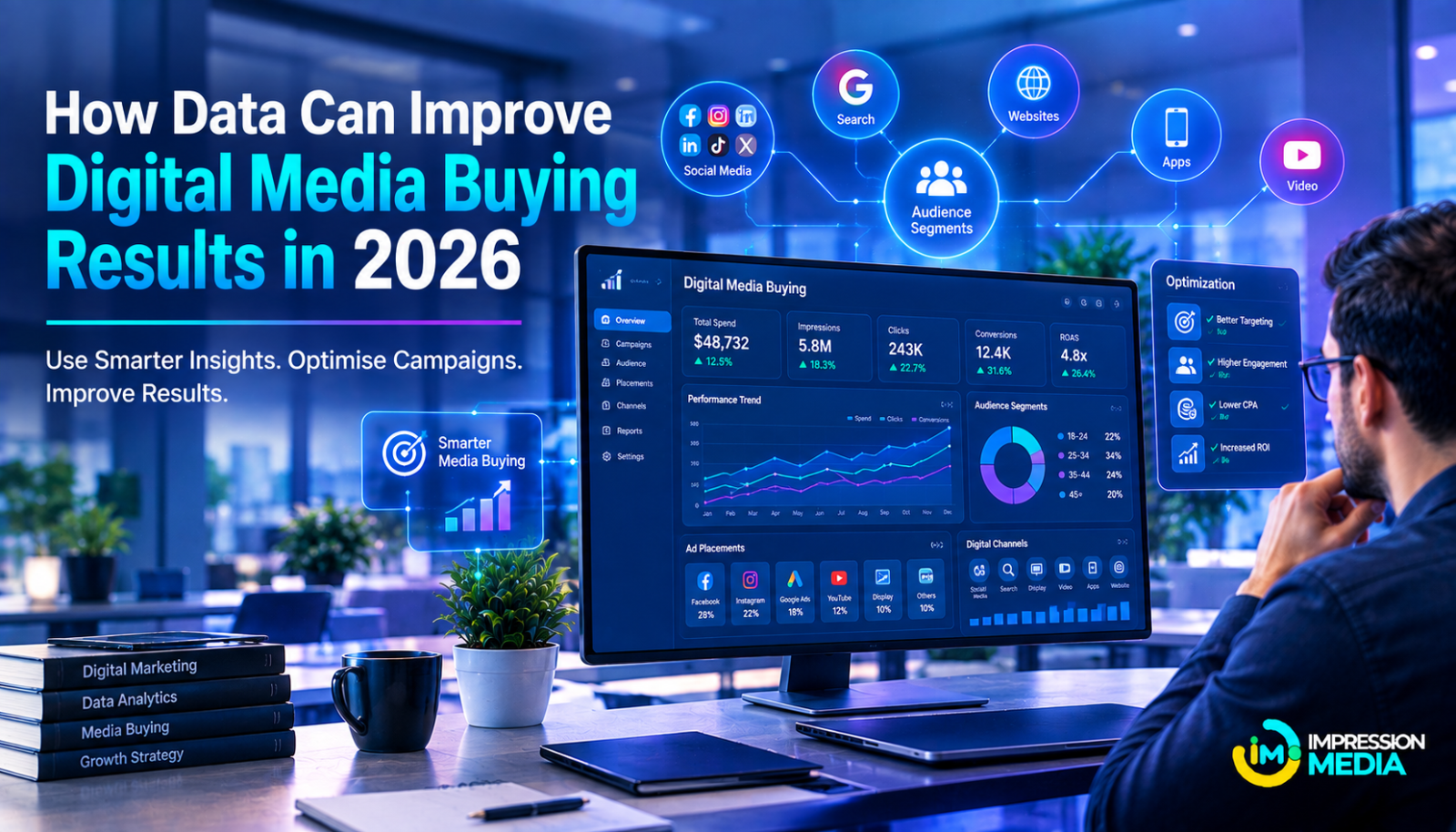
How Data Can Improve Digital Media Buying Results in 2026
Digital advertising has become more competitive than ever.
Businesses now advertise across search engines, social media, websites, apps, video platforms, and other digital channels.
With so many options, simply spending more on advertising does not guarantee better results.
Businesses need to know where their money works best.
This is where data-driven digital media buying becomes important.
Data helps marketers understand audiences, campaign performance, advertising costs, and customer behaviour. These insights can help businesses make better media buying decisions.
In 2026, using data effectively can help brands improve targeting, reduce wasted spending, and achieve stronger campaign results.
Let's understand how data can improve digital media buying.
What Is Digital Media Buying?
Digital media buying is the process of purchasing advertising space across digital platforms.
Businesses can buy advertising placements on channels such as:
- Search engines
- Social media platforms
- Websites
- Mobile apps
- Video platforms
- Digital publications
Media buyers decide where advertisements should appear, who should see them, and how much budget should be allocated.
The goal is to reach the right audience while making efficient use of the advertising budget.
What Is Data-Driven Media Buying?
Data-driven media buying uses customer and campaign data to guide advertising decisions.
Instead of relying only on assumptions, marketers analyse real information.
This data can include:
- Audience demographics
- Website behaviour
- Search behaviour
- Engagement data
- Conversion data
- Advertising costs
- Customer purchase behaviour
- Campaign performance
These insights help marketers understand what works and what needs improvement.
Why Data Matters in Digital Media Buying
Every advertising campaign generates information.
Some advertisements may receive many clicks but few conversions.
Other campaigns may generate fewer clicks but bring more customers.
Without data, these differences can be difficult to identify.
Data helps businesses compare performance and make informed decisions.
It can show which audiences, channels, advertisements, and messages are producing meaningful results.
1. Understand Your Target Audience Better
Audience data helps businesses understand potential customers.
Marketers can analyse information about customer interests, behaviours, locations, devices, and previous interactions.
Create More Relevant Audience Segments
Instead of treating everyone as the same audience, businesses can create different segments.
For example, a business may target:
- New website visitors
- Returning visitors
- Existing customers
- High-intent users
- Users interested in specific products
Different segments can receive different advertising messages.
This can make campaigns more relevant to each audience.
2. Choose the Right Advertising Channels
Every business does not need to advertise on every platform.
Different audiences behave differently across digital channels.
Data can help businesses identify where their target customers spend time.
Compare Channel Performance
Marketers can compare metrics such as:
- Click-through rate
- Conversion rate
- Cost per click
- Cost per lead
- Customer acquisition cost
- Return on ad spend
This information can help businesses decide where to increase or reduce their media budget.
3. Reduce Wasted Advertising Spend
One major benefit of data-driven media buying is better budget control.
Advertising budgets can be wasted when campaigns target irrelevant audiences or poorly performing placements.
Data can reveal these problems.
Identify Underperforming Campaigns
Marketers can review campaigns and identify:
- Low-performing audiences
- Expensive placements
- Weak advertisements
- Poor-performing keywords
- Low-converting traffic sources
Businesses can then adjust their campaigns instead of continuing to spend without results.
4. Improve Ad Targeting
Effective targeting can help businesses reach people who are more likely to respond to an advertisement.
Data provides insights into customer behaviour.
Marketers can use these insights to create more specific targeting strategies.
Use Behavioural Insights
Businesses can analyse actions such as:
- Pages visited
- Products viewed
- Previous purchases
- Search activity
- Content engagement
- Website interactions
These signals can help advertisers deliver more relevant campaigns.
5. Optimise Advertising Creatives
The same audience may respond differently to different advertisements.
One image may generate strong engagement.
Another may receive very little attention.
Data can help marketers identify these differences.
Test Different Creative Elements
Businesses can test:
- Images
- Videos
- Headlines
- Ad copy
- Offers
- Calls to action
- Landing pages
Testing provides useful insights into what attracts and converts the target audience.
6. Improve Campaign Timing
Customer behaviour can change throughout the day or week.
Some audiences may be more active during specific periods.
Data can help marketers identify these patterns.
Use Performance Patterns
Review campaign performance across different:
- Days
- Times
- Locations
- Devices
- Audience segments
Businesses can then adjust campaign delivery based on observed performance.
This can help improve the efficiency of media spending.
7. Make Better Budget Decisions
Budget allocation is an important part of digital media buying.
Businesses need to decide how much money to spend across different channels and campaigns.
Data can support these decisions.
Move Budget Toward Stronger Opportunities
Suppose one campaign consistently produces quality leads at a lower cost.
Another campaign produces expensive leads with fewer conversions.
Performance data can help marketers identify this difference.
They can then review whether shifting budget makes sense.
Budget changes should always consider business goals and customer value.
8. Improve Conversion Tracking
Clicks do not always equal business results.
A campaign may generate thousands of visitors but very few customers.
This makes conversion tracking essential.
Track Meaningful Actions
Businesses can track actions such as:
- Purchases
- Lead submissions
- Phone calls
- App downloads
- Registrations
- Product enquiries
This helps marketers understand whether media spending is producing meaningful outcomes.
9. Use Data for Retargeting
Many users do not convert during their first interaction with a brand.
They may visit a website, browse products, and leave without purchasing.
Retargeting can help businesses reconnect with these users.
Create Relevant Retargeting Campaigns
Businesses can create different campaigns for different user actions.
For example, someone who viewed a product can receive a relevant follow-up advertisement.
Someone who completed a purchase may receive a different message.
This approach can create more relevant customer experiences.
10. Measure Results and Keep Optimising
Digital media buying should not end when a campaign launches.
Marketers should continuously review performance.
Data provides the feedback needed for ongoing optimisation.
Monitor the Right Metrics
Important metrics may include:
- Impressions
- Reach
- Click-through rate
- Conversion rate
- Cost per acquisition
- Cost per lead
- Return on ad spend
- Revenue
The right metrics depend on the campaign objective.
A brand awareness campaign may focus on reach and impressions.
A lead generation campaign may focus more on qualified leads and acquisition costs.
Common Data Mistakes in Digital Media Buying
Data can improve media buying, but marketers need to use it correctly.
Focusing Only on Clicks
A high number of clicks does not guarantee business growth.
Marketers should connect clicks with conversions and revenue where possible.
Using Too Much Data
Too many metrics can make decision-making confusing.
Focus on the numbers that directly support your campaign objectives.
Ignoring Data Quality
Incorrect or incomplete data can lead to poor decisions.
Businesses should regularly check their tracking systems and reporting processes.
Making Changes Too Quickly
Campaigns need enough data for meaningful analysis.
Constantly changing campaigns can make performance difficult to evaluate.
The Role of AI in Data-Driven Media Buying
Artificial intelligence is increasingly useful in digital advertising.
AI can help analyse large amounts of campaign data quickly.
It can identify patterns and support tasks such as audience analysis, optimisation, forecasting, and reporting.
However, businesses should still maintain human oversight.
Marketing goals, brand positioning, customer understanding, and strategic decisions require human judgement.
How Businesses Can Build a Data-Driven Media Buying Strategy
A strong strategy does not need to be complicated.
Businesses can follow a simple process:
- Define clear campaign objectives.
- Identify the target audience.
- Select relevant advertising channels.
- Set up accurate tracking.
- Launch campaigns with clear KPIs.
- Monitor performance regularly.
- Test different approaches.
- Optimise based on reliable data.
- Review results against business goals.
This creates a continuous process of testing and improvement.
Conclusion
Data has become an important part of modern digital media buying.
It helps businesses understand their audiences, select suitable channels, improve targeting, control advertising costs, and measure campaign performance.
Data can also help marketers optimise creative content, improve conversion tracking, and make smarter budget decisions.
However, successful media buying requires more than collecting numbers.
Businesses need accurate data, clear goals, proper tracking, and a willingness to test and improve.
In 2026, brands that combine data, technology, creativity, and human strategy can make more informed digital advertising decisions and use their media budgets more effectively.