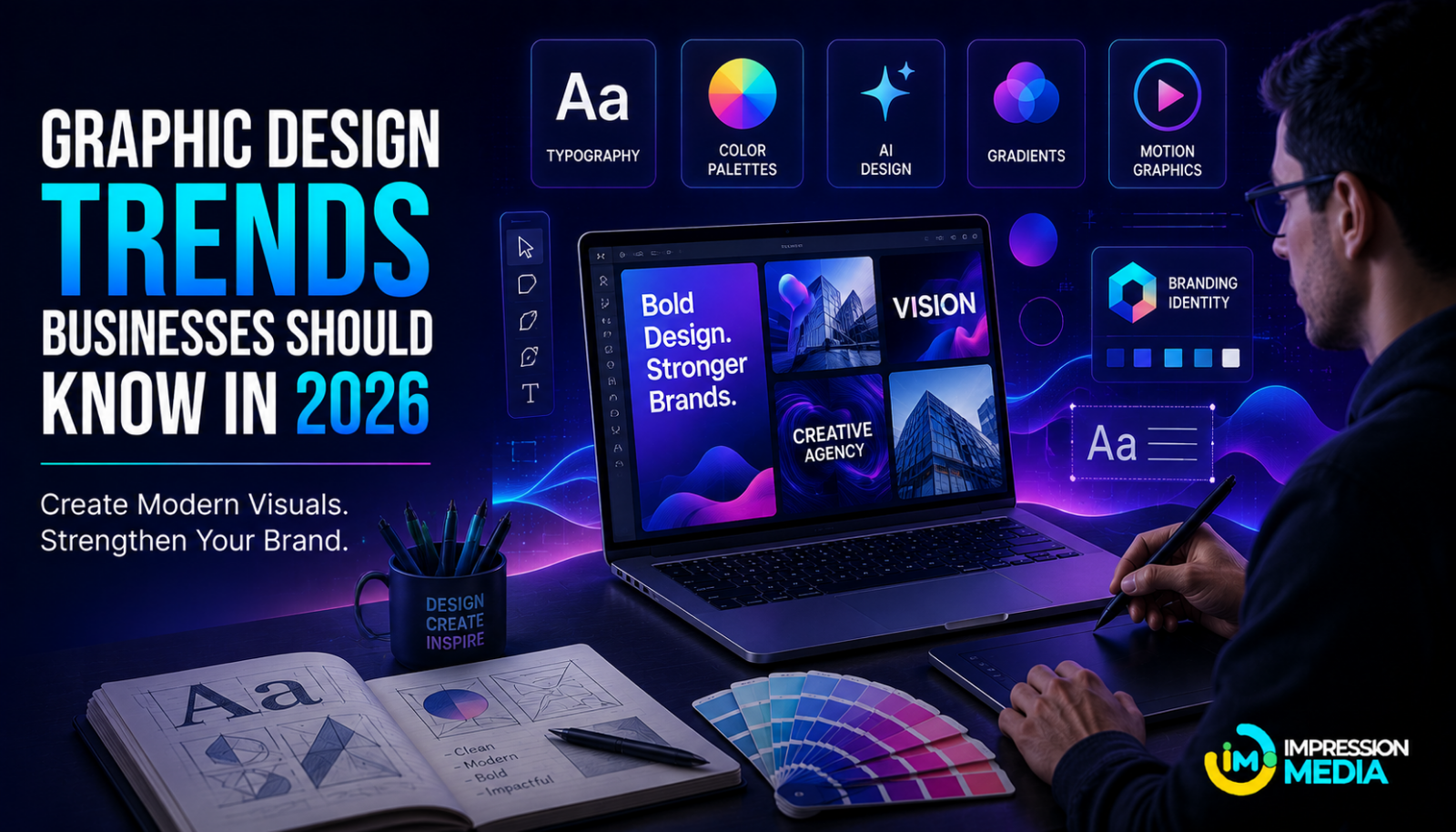
Graphic Design Trends Businesses Should Know in 2026
Graphic design plays an important role in how customers see a business. From social media posts and websites to advertisements and product packaging, visual content helps brands communicate with their audiences.
As digital platforms continue to change, graphic design trends are also evolving. Businesses need visuals that look modern, communicate clearly, and match customer expectations.
In 2026, businesses are moving toward designs that combine creativity, technology, simplicity, and strong brand identity.
Understanding the latest graphic design trends can help businesses create more engaging content and maintain a modern visual presence.
Let's explore the key graphic design trends businesses should know in 2026.
Why Graphic Design Matters for Businesses
Graphic design is more than making content look attractive. It helps businesses communicate ideas quickly and create a recognisable brand identity.
Good graphic design can help businesses:
- Build brand recognition
- Improve customer engagement
- Communicate complex ideas
- Create a professional image
- Support digital marketing campaigns
- Increase visual consistency
- Improve customer experience
In a competitive digital environment, strong visual communication can help a business stand out.
1. AI-Assisted Graphic Design
Artificial intelligence is changing how designers create and manage visual content.
AI-powered tools can help with tasks such as generating ideas, creating concepts, removing backgrounds, resizing designs, and producing variations.
However, AI does not replace the need for creative thinking.
Why It Matters
AI can help designers save time on repetitive tasks. This allows them to spend more time on creative concepts, brand strategy, and visual storytelling.
Businesses can also use AI-assisted workflows to produce content more efficiently.
2. Minimalist and Clean Designs
Minimalism continues to be an important design approach.
Clean layouts make content easier to understand. They also help important messages stand out.
Businesses are using:
- Simple colour palettes
- Clean typography
- Open space
- Simple layouts
- Clear visual hierarchy
Why It Works
Customers often scroll quickly through digital content.
A simple design can communicate the main message without overwhelming the viewer.
3. Bold Typography
Typography is becoming a stronger part of modern graphic design.
Large and expressive fonts can help brands create memorable visuals.
Designers are using bold typography in:
- Social media graphics
- Digital advertisements
- Website banners
- Brand campaigns
- Promotional content
Why It Matters
Strong typography can attract attention while communicating a message quickly.
However, businesses should still prioritise readability and brand consistency.
4. Authentic and Human-Centred Visuals
Audiences increasingly value content that feels genuine.
Highly polished stock images can sometimes feel disconnected from real experiences.
Businesses are therefore using more authentic photography, real people, natural environments, and relatable visuals.
How Businesses Can Use It
Brands can showcase:
- Real customers
- Employees
- Behind-the-scenes moments
- Product usage
- Company culture
Authentic visuals can make a brand feel more approachable and relatable.
5. Motion Graphics and Animated Design
Static graphics are no longer the only option.
Motion graphics can make digital content more engaging. Businesses can use simple animations for social media posts, advertisements, presentations, websites, and videos.
Why Motion Design Is Growing
Movement naturally attracts attention.
Even small animations can help highlight important information and create a more dynamic experience.
The key is moderation. Too many animations can make a design distracting.
6. Personalised Visual Content
Personalisation is becoming more important in digital marketing.
Businesses can create different visuals for different customer groups.
For example, an e-commerce brand may show different product recommendations based on customer interests.
Benefits of Personalised Design
Personalised visual content can help:
- Improve relevance
- Increase engagement
- Strengthen customer relationships
- Support targeted marketing
- Improve campaign performance
The goal is to make customers feel that the content is relevant to them.
7. Interactive Design
Interactive design allows users to engage with content rather than simply viewing it.
Businesses can use interactive elements on websites, digital campaigns, presentations, and other platforms.
Examples include:
- Interactive product displays
- Animated interfaces
- Clickable graphics
- Interactive infographics
- Scroll-based experiences
Why Interactive Design Matters
Interactive experiences can encourage users to spend more time with your content.
When used properly, they can make information easier and more enjoyable to explore.
8. Sustainable and Responsible Design
Sustainability is becoming increasingly important for many brands.
Businesses are communicating environmental and social values through their visual identity.
This can include natural visual styles, responsible packaging designs, and clear sustainability messaging.
Build Authenticity
Businesses should avoid using sustainability as a simple design trend.
Visual communication should reflect genuine business practices.
Authentic messaging helps build stronger customer trust.
9. Data-Driven Graphic Design
Graphic design is increasingly connected with marketing data.
Businesses can analyse how audiences respond to different visuals and use those insights to improve future campaigns.
Important indicators can include:
- Engagement
- Click-through rate
- Conversions
- Shares
- Saves
- Website activity
Why Data Matters
Creative decisions can become more effective when supported by real audience behaviour.
Designers can identify which formats, layouts, images, and messages perform best.
10. Consistent Brand Visuals
With businesses publishing content across many platforms, consistency is becoming more important.
Your website, social media posts, advertisements, presentations, and other marketing materials should feel connected.
Create a Strong Visual Identity
Use consistent:
- Colours
- Fonts
- Logo placement
- Imagery
- Design elements
- Brand style
A consistent visual identity makes your business easier to recognise.
How Businesses Can Use Graphic Design Trends
Following every trend is not always the best approach.
Businesses should choose trends that support their brand and audience.
1. Focus on Your Brand
Your design should reflect your business personality.
A financial company may need a professional visual style, while a lifestyle brand may use a more expressive approach.
2. Prioritise Your Audience
Think about what your customers find useful and engaging.
A trend should improve communication, not simply make your content look fashionable.
3. Test Different Designs
Try different visual approaches and monitor performance.
Use audience feedback and marketing data to understand which designs work best.
Common Graphic Design Mistakes to Avoid
Businesses can weaken their visual identity by making simple design mistakes.
Avoid:
- Using too many fonts
- Overloading designs with information
- Ignoring brand guidelines
- Using poor-quality images
- Following trends without purpose
- Creating inconsistent visuals
- Sacrificing readability for creativity
Good design should balance creativity with clarity.
Conclusion
Graphic design continues to evolve as technology and customer behaviour change.
In 2026, businesses are embracing AI-assisted design, minimal layouts, bold typography, authentic visuals, motion graphics, personalised content, interactive experiences, and data-driven design.
However, trends should never replace a strong brand identity.
The best graphic design strategy combines creativity, consistency, usability, and a clear understanding of the target audience.
Businesses that use modern design trends thoughtfully can create stronger visual identities, improve customer engagement, and communicate their messages more effectively.
Whether you need social media graphics, website visuals, advertising creatives, or complete brand design, professional graphic design can help your business create a stronger and more memorable digital presence.